

Dental Imaging Technology
At Onyx Dental, we utilize dental imaging, including the Carestream 8200 and iTero Element 5D scanner, for precise, low-radiation diagnostics. This technology offers comprehensive digital x-rays, CBCT 3D imaging, panoramic, and cephalometric services, plus radiation-free detection of hidden issues. Our commitment to early detection and preventive care ensures optimal dental health, saving patients time, discomfort, and expense.
What is Dental Imaging and
Why is it Important?
Definition and Types of Dental Imaging
At Onyx Dental in Mississauga, we utilize dental imaging, including the Carestream 8200 and iTero Element 5D scanner, for precise, low-radiation diagnostics. This technology offers comprehensive digital x-rays, CBCT 3D imaging, panoramic, and cephalometric services, plus radiation-free detection of hidden issues. Our commitment to early detection and preventive care ensures optimal dental health, saving patients time, discomfort, and expense.
The Benefits for Diagnosis and Treatment Planning
These imaging technologies transform how dental professionals approach dental care by providing detailed insights that guide every aspect of your treatment. Our Carestream imaging system enables early detection of dental problems before they become painful or costly to treat, allowing for conservative interventions that preserve your natural tooth structure. The precision of 3D imaging helps us plan complex procedures, like dental implant placement for example, with millimetre accuracy, reducing treatment time and improving outcomes. For orthodontic patients, our cephalometric imaging provides essential measurements for creating personalized treatment plans that achieve optimal bite alignment and facial harmony.
Patient Safety Considerations
Patient safety remains our highest priority when utilizing diagnostic imaging technology. Our Carestream 8200 system incorporates advanced dose reduction protocols that minimize radiation exposure while maintaining exceptional image quality. Digital imaging reduces radiation exposure by up to 90% compared to traditional film-based X-rays, and our equipment undergoes regular calibration and safety inspections to ensure optimal performance. We carefully evaluate the diagnostic necessity of each imaging procedure and follow strict protocols to protect patients, particularly pregnant women and children, while providing the detailed information necessary for accurate diagnosis and treatment planning.
When Precision Matters
Digital X-Rays (Intraoral Radiography)
- Instant high-resolution images with minimal radiation exposure
- Detailed views of individual teeth and surrounding bone structure
- Enhanced diagnostic capabilities with digital magnification and contrast adjustment
- Environmentally friendly with no chemical processing required
- Immediate viewing and easy sharing with specialists when needed
3D Cone Beam Computed Tomography (CBCT)
- 3D views of teeth, jaw bones, and facial structures
- Essential for dental implant planning and placement verification
- Detailed assessment of airway structures and TMJ evaluation
- Precise measurement capabilities for surgical procedures
- Visualization of complex root canal anatomy
Panoramic X-Rays
- Comprehensive overview of entire upper and lower jaws in single image
- Excellent screening tool for detecting cysts, tumours, and impacted teeth
- Assessment of jaw joint health and facial bone structure
- Monitoring of developing teeth in children and adolescents
- Essential for wisdom teeth evaluation and removal planning
Lateral Cephalometric (Lat Ceph) Imaging
- Orthodontic imaging for profile analysis and treatment planning
- Precise measurements of facial proportions and jaw relationships
- Growth pattern assessment in developing patients
- Treatment progress monitoring for orthodontic and surgical cases
- Digital analysis capabilities for enhanced precision
What Does This Mean For My Care?
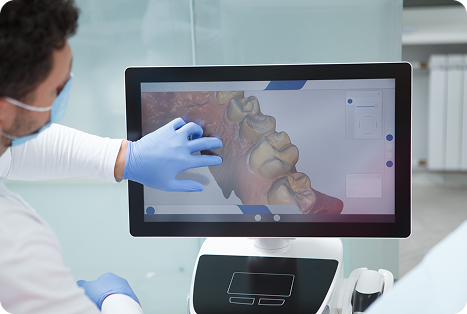
Cavity Detection Capabilities
Our imaging technology helps in identifying dental decay in its earliest stages, often before symptoms develop. Digital sensors provide good contrast resolution that reveals small cavities between teeth that may be missed during visual examination alone. The Carestream system’s enhanced imaging capabilities allow us to detect secondary decay around existing fillings and crown margins, preventing more extensive damage. 3D CBCT imaging proves invaluable for assessing the extent of decay that has reached the tooth’s nerve, helping us determine whether root canal therapy or other treatments are necessary for preserving your natural tooth.
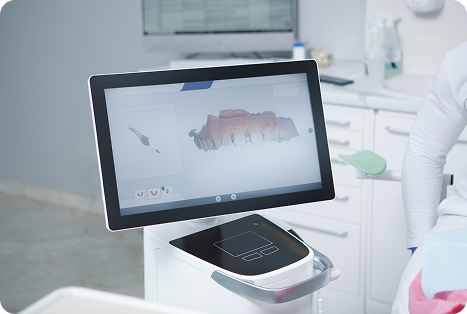
Structural Issues Identification
Comprehensive imaging reveals structural abnormalities that could compromise your oral health and overall well-being. Our technology identifies jaw fractures, bone loss from periodontal disease, and developmental anomalies that may require specialized treatment. CBCT imaging provides detailed views of bone density and quality, essential information for successful dental implant placement and healing prediction. We can also detect signs of teeth grinding damage, jaw joint disorders, and bone infections that may not be apparent during routine clinical examination.

TMJ and Jaw Assessment
Temporomandibular joint disorders require precise imaging for accurate diagnosis and treatment planning. Our Carestream system provides clear visualization of jaw joint structures, including the joint spaces, bone surfaces, and surrounding tissues. 3D imaging reveals joint positioning abnormalities, arthritis changes, and structural damage that contribute to jaw pain and dysfunction. This detailed information allows us to develop targeted treatment approaches that address the underlying causes of TMJ disorders rather than just managing symptoms.
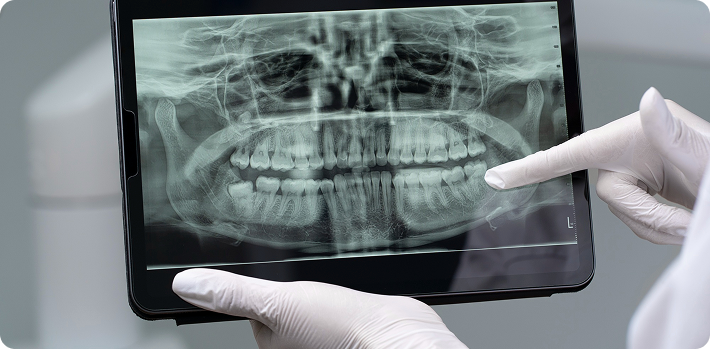
Orthodontic Analysis
Orthodontic treatment success depends on thorough analysis of tooth positioning, jaw relationships, and growth patterns. Our cephalometric imaging provides standardized measurements essential for creating personalized treatment plans that achieve optimal functional and aesthetic results. Digital analysis software allows precise evaluation of facial proportions and prediction of treatment outcomes. We can assess airway dimensions to identify breathing issues that may be improved through orthodontic treatment, providing comprehensive care that addresses both dental alignment and overall health.
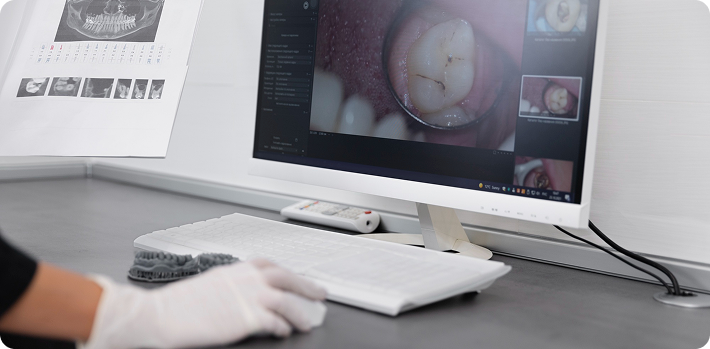
Early Detection Advantages
The sophistication of our imaging technology enables detection of oral health problems years before they would become apparent through traditional examination methods. Early identification of bone loss, cysts, tumours, and other abnormalities allows for prompt treatment that often prevents more invasive and costly procedures. Our ability to monitor changes over time through digital image comparison helps us track treatment progress and identify potential problems before they compromise your oral health. This proactive approach to dental care saves patients time, money, and discomfort while preserving their natural teeth and supporting structures.
Is Dental Imaging Safe?
Dental imaging at Onyx Dental incorporates multiple safety measures designed to minimize radiation exposure while providing exceptional diagnostic information. Our Carestream 8200 system utilizes sensors and optimized exposure protocols that reduce radiation dose to the lowest levels necessary for diagnostic quality images. Digital imaging eliminates the need for chemical processing, creating a safer environment for both patients and staff while reducing environmental impact.
The radiation exposure from our digital dental X-rays is comparable to the natural background radiation you receive from a few days of normal daily activities. Our CBCT system, while providing 3D imaging capabilities, uses focused beam technology that concentrates radiation only on the area of interest, minimizing exposure to surrounding tissues. All imaging equipment undergoes regular calibration and safety inspections to ensure optimal performance and patient protection.
We carefully evaluate each patient’s individual needs and medical history before recommending imaging procedures. Pregnant women receive special consideration, with imaging typically postponed until after delivery unless emergency treatment is required. For pediatric patients, we use the lowest possible radiation doses and lead aprons to provide additional protection during imaging procedures.

When Should I Get Dental Imaging Done?
Imaging frequency varies by risk and needs. New patients get comprehensive imaging initially for a baseline. Most adults need annual bitewings; those with active disease or high cavity risk may need more frequent imaging. Immediate imaging is for pain, trauma, swelling, or suspected infections. Orthodontic patients need specialized imaging pre- and mid-treatment. Dental implant candidates require detailed 3D imaging for bone. Regular imaging aids early detection and conservative treatment. We personalize schedules to optimize diagnostics, minimizing radiation and cost.
What to Expect During Your Dental Imaging Appointment
Onyx Dental’s imaging appointments are efficient and thorough. We review your medical history, explain imaging, and position you. Digital X-rays are quick (minutes) with immediate images. Our Carestream system ensures proper positioning, minimizing retakes. Panoramic imaging takes 20 seconds, capturing a full jaw and teeth view. CBCT imaging is similar but provides 3D information for complex treatment. It’s painless and quick. We’ll guide you for comfort and cooperation.
After imaging, our Mississauga dentist will review and discuss findings with you using display technology. We encourage questions and provide detailed explanations for informed decisions!

Frequently Asked Questions About Our Dental Imaging Technology
What radiation levels are used in the Carestream 8200 system?
The Carestream 8200 system utilizes optimized exposure parameters that significantly reduce radiation dose while maintaining exceptional diagnostic image quality. Digital sensors require approximately 80-90% less radiation than traditional film-based systems. Our CBCT imaging uses focused cone beam technology that concentrates radiation only on the specific area of interest, minimizing exposure to surrounding tissues. The system incorporates automatic exposure control and dose optimization protocols that adjust settings based on patient size and the specific diagnostic requirements of each case.
What's the difference between panoramic and CBCT imaging?
Panoramic imaging creates a 2D overview of your entire upper and lower jaws, teeth, and surrounding structures in a single image, making it good for general screening and assessment. CBCT imaging provides three-dimensional views that allow examination of structures from multiple angles and cross-sections, essential for detailed treatment planning. While panoramic images are ideal for routine examinations and general diagnostic purposes, CBCT imaging is necessary for complex procedures like dental implant placement, detailed root canal assessment, and comprehensive jaw joint evaluation.
How does cephalometric imaging help with orthodontic treatment?
Cephalometric imaging provides standardized measurements of facial proportions, jaw relationships, and tooth positions essential for orthodontic diagnosis and treatment planning. These images allow us to assess growth patterns, predict treatment outcomes, and monitor progress throughout orthodontic care. Digital cephalometric analysis helps determine the optimal treatment approach for achieving proper bite alignment and facial balance while identifying any underlying skeletal issues that may require specialized treatment approaches.
Is dental imaging safe during pregnancy?
While dental imaging involves minimal radiation exposure, we typically postpone routine diagnostic imaging until after delivery as a precautionary measure. Emergency imaging may be necessary if dental pain or infection requires immediate diagnosis and treatment, as untreated dental infections pose greater risks to both mother and baby than the minimal radiation exposure from diagnostic imaging. When imaging is necessary during pregnancy, we use additional protective measures and limit imaging to the specific area requiring diagnosis.
Can children get CBCT or panoramic imaging?
Yes, both CBCT and panoramic imaging are safe for children when clinically necessary. We use specialized pediatric imaging protocols that minimize radiation exposure while providing the diagnostic information needed for proper treatment. Panoramic imaging is commonly used to assess developing teeth, monitor growth, and evaluate orthodontic needs. CBCT imaging may be recommended for complex cases involving impacted teeth, jaw development issues, or when detailed 3D information is essential for treatment planning. Our team takes special care to ensure children are comfortable and cooperative during imaging procedures.
Ready to Schedule Your Appointment?
Experience the difference that our dental imaging technology makes in your oral health care. At Onyx Dental, the Carestream 8200 system provides the detailed diagnostic information necessary for precise treatment planning and optimal outcomes. Whether you need routine screening images or 3D imaging for complex procedures, our team is ready to provide safe, comfortable, and comprehensive imaging services.
Book your consultation today and discover how our comprehensive diagnostic capabilities can help you achieve and maintain your oral health.
For more information or or a general inquiry, call us at (905) 567 4999 or complete the form.
