

Have you ever heard the saying “Life is short, smile while you still have teeth”? It’s funny but true. Most of us don’t get to keep all of our teeth as we age, and that goes for both childhood and adult sets. Holding on to what you have is a matter of proactive care. In this article, we’ll discuss the role of preventative dentistry in oral health preservation, why it matters, and how you can invest in long-term mouth health.
Appreciating Oral Health Preservation
What does it mean to have a healthy mouth? There’s no solid definition for oral well-being. The goal is relative and ongoing – what counts as an achievement for one person might already be a daily practice for another. Similarly, everyone can do a little something extra to bolster their personal care regimen in one way or another. In every case, though, the underlying intention remains the same, and that’s to preserve tooth and gum integrity.
The longer your natural smile stays intact and functional, the easier life is to manage. Dental implants have come a long way over recent decades, and are almost a perfect substitute for natural teeth, providing bite force and maintaining facial structure effectively. However, they can’t offer sensory feedback. This is why prevention and preservation should always be the primary focus of any oral health strategy.
What is Restorative Dentistry?
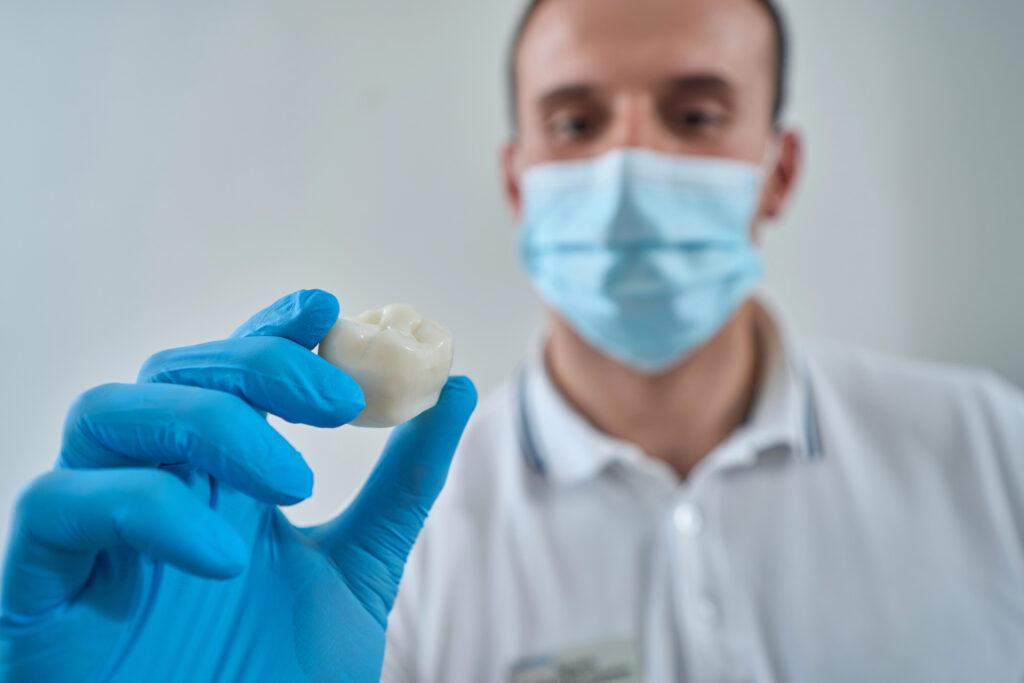
Restorative dentistry is a branch of dental medicine focused on diagnosing, treating, and restoring damaged, decayed, or missing teeth to their natural function, appearance, and health. The field combines preventive and therapeutic approaches through common procedures such as dental fillings, crowns, bridges, implants, inlays, onlays, and partial or complete dentures. Although for different issues, all treatments aim to both restore the tooth’s original function – proper chewing and speaking – while maintaining the aesthetic appearance of a patient’s smile.
When Do You Need Restorative Dentistry?
The significance of the role of restorative dentistry in a person’s life is completely up to them. In some cases, an unexpected issue makes emergency treatment necessary. Take, for example, a patient who chips a front tooth while eating or suffers from severe tooth pain due to an untreated cavity that has reached the nerve. They would opt for immediate restorative treatment to address both the functional and aesthetic concerns.
But restorative dentistry can also be elective or less urgent. The focus for some is mainly aesthetic, like chipped teeth that don’t cause pain but affect confidence when smiling, or minor gaps between teeth that patients want to close with bonding or veneers.
Whatever the case, taking action to rectify damage is always a good idea. It’s in your best interest from the perspectives of pain prevention and long-term oral health preservation. Early intervention can prevent minor issues from developing into more complex and costly problems. For instance, treating a small cavity with a simple filling is far less invasive and expensive than waiting until the decay spreads, potentially requiring a root canal, crown, or even tooth extraction.

The Role of Restorative Dentistry In Oral Health Preservation
Restorative dentistry can support oral health preservation in a number of ways. The role it plays in your journey may take many forms, including but not limited to the following common treatments.
Dental Fillings: Composite resin, amalgam, or ceramic materials used to repair cavities and restore tooth structure
Dental Crowns: Cap-like restorations that cover and protect damaged or weakened teeth
Dental Bridges: Fixed prosthetic devices that replace one or more missing teeth by anchoring to adjacent teeth
Dental Implants: Titanium posts surgically placed in the jawbone to replace missing tooth roots and support crowns
Inlays and Onlays: Custom-made restorations that repair larger areas of tooth damage when fillings are insufficient
Root Canal Therapy: Treatment to remove infected or damaged pulp tissue and seal the tooth to prevent further infection
Dental Veneers: Thin shells of porcelain or composite resin bonded to the front surface of teeth to improve appearance and function
Dentures: Removable prosthetic devices that replace multiple missing teeth (partial or complete)
Tooth Bonding: Application of tooth-colored composite resin to repair chips, cracks, or gaps
Periodontal Therapy: Treatment of gum disease through scaling, root planing, and other procedures to restore gum health
Orthodontic Treatment: Braces, aligners, and other appliances to correct tooth alignment and bite issues
Dental Sealants: Protective coatings applied to the chewing surfaces of back teeth to prevent decay

Don’t Discount the Role of Restorative Dentistry in Oral Health Preservation
The role of restorative dentistry in oral health preservation is just as important as other disciplines within dental care. Onyx Dental practices them all for patients in Erin Mills, Mississauga. Come to us for in-depth, considerate treatment for concerns both urgent and elective. We’ll show you how to maximize the role of preventative dentistry while addressing any restorative needs with precision and care.
Call now or book your appointment online – your healthiest smile is just one visit away.
